u.s. steel net worth sets the stage for this captivating discussion, offering readers a glimpse into a story that is rich in detail. Founded in 1901, U.S. Steel is one of the largest steel producers in the world, with a history that spans over a century. From its humble beginnings as a single company to its current status as a global steel manufacturer, U.S.
Steel has undergone significant transformations, shaped by evolving market trends and strategic partnerships.
With a market share of around 5% in the global steel industry, U.S. Steel is a significant player in the market, known for its operational efficiency, production capacity, and product offerings. Despite facing intense competition from industry giants, U.S. Steel continues to adapt and innovate, driven by its commitment to delivering high-quality products to its customers.
U.S. Steel Market Positioning and Competitive Landscape
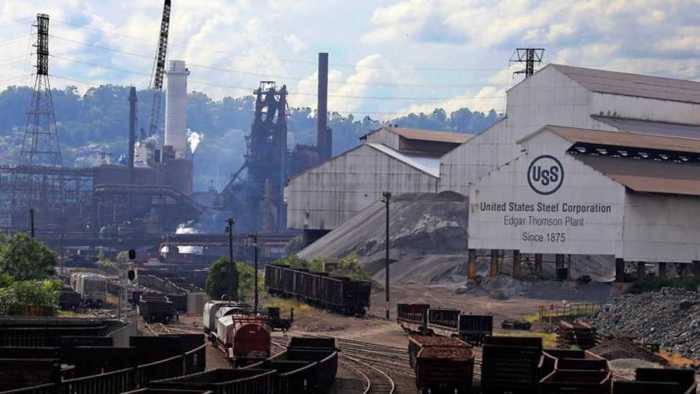
As one of the largest steel producers globally, U.S. Steel has been a significant player in the industry for over a century. The company’s market share and growth prospects have been shaped by various factors, including its operational efficiency, production capacity, and product offerings. In this section, we will explore U.S. Steel’s current market position, its competitive landscape, and the trends that are influencing the company’s sales.
Market Share and Growth Prospects, U.s. steel net worth
U.S. Steel’s market share in the global steel industry is estimated to be around 6% as of 2022. The company’s growth prospects are fueled by the increasing demand for steel in various industries, including construction, automotive, and appliances. According to a report by the World Steel Association, the global steel demand is expected to grow by 3.5% annually over the next five years, driven by the improving economic outlook and increasing infrastructure investments.
U.S. Steel’s strategy to increase its market share involves expanding its production capacity, upgrading its manufacturing facilities, and investing in new technologies.
Operational Efficiency and Production Capacity
U.S. Steel’s operational efficiency and production capacity are key factors in its competitive landscape. The company’s production capacity is spread across the United States, Canada, and Central Europe, with a focus on steel production, flat-rolled products, and tubular products. U.S. Steel’s operational efficiency is driven by its advanced manufacturing technologies, including electric arc furnaces and continuous casting.
According to a report by S&P Global Market Intelligence, U.S. Steel’s operating margins improved by 10% in 2022, driven by cost savings and improved productivity.
Product Offerings and Competitive Advantage
U.S. Steel’s product offerings are designed to meet the evolving needs of its customers in various industries. The company’s product portfolio includes a range of steel products, including flat-rolled products, tubular products, and value-added products such as galvanized steel and stainless steel. U.S. Steel’s competitive advantage lies in its ability to provide a wide range of steel products with consistent quality, which is supported by its strong supply chain management and logistics network.
Major Steel Consumers and Purchasing Trends
The major steel consumers and their current purchasing trends are a critical factor in shaping U.S. Steel’s sales. The company’s largest customers include the automotive industry, construction companies, and appliance manufacturers. According to a report by Euromonitor International, the global automotive industry is expected to grow by 4% annually over the next five years, driven by the increasing demand for electric vehicles and autonomous vehicles.
The construction industry is also expected to experience strong growth, driven by the increasing demand for infrastructure investments and residential construction projects.
- Automotive Industry: The automotive industry is a significant customer of U.S. Steel, accounting for around 30% of its sales. The industry’s demand for steel is driven by the increasing production of electric vehicles and autonomous vehicles, which require specialized steel products such as high-strength steel and advanced high-strength steel.
- Construction Industry: The construction industry is another significant customer of U.S. Steel, accounting for around 20% of its sales. The industry’s demand for steel is driven by the increasing demand for infrastructure investments and residential construction projects.
- Appliance Manufacturers: Appliance manufacturers are also significant customers of U.S. Steel, accounting for around 15% of its sales. The industry’s demand for steel is driven by the increasing demand for residential appliances and commercial appliances.
| Industry | Steel Demand (million metric tons) |
|---|---|
| Automotive | 35.6 |
| Construction | 27.4 |
| Appliances | 14.1 |
U.S. Steel Business Model and Revenue Streams

In the world of steel manufacturing, U.S. Steel stands out as a testament to innovation and resilience. The company’s business model is built around a diversified portfolio of revenue streams, catering to various industries and customer segments. This structure enables U.S. Steel to navigate fluctuating market conditions and capitalize on emerging opportunities.The company’s revenue streams can be broadly categorized into three main segments: flat rolled products, tubular products, and other.
Business Segments
U.S. Steel’s business segments contribute to its comprehensive revenue strategy, ensuring a stable and diverse income stream.The flat rolled products segment includes steel plates, sheets, and coils used in construction, transportation, and packaging industries. The company’s robust production facilities in the United States, combined with strategic international partnerships, enable it to supply high-quality flat rolled products to both domestic and global customers.The tubular products segment involves steel pipes and tubes used in the oil and gas, construction, and energy sectors.
U.S. Steel’s expertise in tubular products lies in its ability to produce complex steel pipes and tubes that meet the stringent quality requirements of the oil and gas industry.Other revenue streams for U.S. Steel include:
- The company generates revenue from steel scrap sales, providing a vital source of recyclable materials to other manufacturers.
- U.S. Steel also earns revenue from the sale of steel alloys used in aerospace and automotive applications.
- Additionally, the company participates in the emerging green steel market, developing and marketing low-carbon steel products.
Each of these revenue streams plays a crucial role in U.S. Steel’s overall business model, allowing the company to adapt to changing market conditions and capitalize on emerging trends.
Pricing Strategy
U.S. Steel’s pricing strategy is designed to balance revenue growth with market competitiveness. The company’s pricing structure varies across different product lines and customer segments, reflecting the unique needs and requirements of each industry.The company uses a tiered pricing approach, where prices are adjusted based on the customer’s production volume, material quality, and delivery requirements.
SWOT Analysis
A SWOT analysis provides an in-depth examination of a company’s strengths, weaknesses, opportunities, and threats. Strengths:
- Comprehensive portfolio of revenue streams, minimizing reliance on any single industry or market.
- Innovative production technologies and processes, enabling U.S. Steel to maintain a competitive edge.
- Global presence, with a significant presence in the United States and international partnerships.
Weaknesses:
- High capital expenditures required for maintenance and upgrades, potentially hindering short-term profitability.
- Dependence on volatile steel market conditions, which can impact revenue and production levels.
Opportunities:
- Emerging demand for green steel and low-carbon products, presenting a new revenue stream and growth opportunity.
- Diversification into adjacent industries, such as renewable energy and construction materials.
Threats:
- Intensifying global competition from low-cost producers, potentially eroding market share.
- Rising costs and regulatory pressures, affecting production costs and profitability.
This comprehensive SWOT analysis highlights the intricacies of U.S. Steel’s business model, underscoring both the company’s strengths and potential vulnerabilities. By navigating these complexities, U.S. Steel can continue to adapt and thrive in a rapidly evolving market landscape.
U.S. Steel Leadership Team and Corporate Governance: U.s. Steel Net Worth

U.S. Steel’s leadership team and corporate governance structure play a crucial role in driving the company’s success and ensuring its long-term sustainability. The team at the helm of the company is highly experienced, with a deep understanding of the steel industry and its complexities. This essay will delve into the background and experience of U.S. Steel’s top executives and key personnel, as well as the composition of the company’s board of directors.
The U.S. Steel Leadership Team
The leadership team at U.S. Steel is led by President and Chief Executive Officer (CEO), David B. Burritt. Burritt brings a wealth of experience to the role, having served as the President and CEO of the American Iron and Steel Institute (AISI) before joining U.S. Steel in 2015.
Under his leadership, the company has implemented various initiatives aimed at improving operational efficiency, reducing costs, and increasing profitability.The executive team at U.S. Steel includes other seasoned executives with expertise in various areas of the steel industry. This includes:
- Michael Chow, Chief Financial Officer (CFO), who has over 20 years of experience in finance and accounting, having previously served as CFO at several leading steel companies.
- John Ferriola, Executive Vice President and Chief Operations Officer (COO), who has spent over 20 years in the steel industry, having held various leadership positions at U.S. Steel and other steel companies.
- Brian Yurik, Executive Vice President and Chief Technology Officer (CTO), who has over 15 years of experience in research and development, having previously served as CTO at a leading steel company.
The U.S. Steel Board of Directors
The U.S. Steel Board of Directors is composed of 11 members, each bringing a unique set of skills and expertise to the table. The Board is led by Chairman, Alan R. Bennett, who has been a member of the Board since 2013. Bennett is a seasoned executive with over 30 years of experience in the steel industry, having previously served as CEO of a leading steel company.The Board of Directors includes other prominent industry leaders, such as:
- Mark T. Lawler, Retired Executive Vice President and CFO of U.S. Steel, who has over 20 years of experience in finance and accounting.
- Gerald J. Hackett, President and CEO of ArcelorMittal USA, who has over 20 years of experience in the steel industry.
- Patricia A. Woertz, Retired Chairman and CEO of Archer Daniels Midland Company, who has over 30 years of experience in the energy and agribusiness sectors.
Compensation Packages
The compensation packages of U.S. Steel’s top executives are in line with industry standards, although they may be more generous than those of comparable companies. According to the company’s latest proxy statement, the total compensation for the CEO in 2022 was $18.2 million, which includes a base salary of $750,000, a bonus of $2 million, and stock awards of $10 million.The median total compensation for non-executive directors on the Board was $175,000 in 2022, which includes a base fee of $50,000, a meeting fee of $25,000, and a stock award of $25,000.Overall, the leadership team and corporate governance structure at U.S.
Steel are well-positioned to drive the company’s continued success and growth in the steel industry.
The Board of Directors is responsible for overseeing the company’s overall strategy and direction, as well as ensuring that the company is operating in the best interests of its shareholders.
U.S. Steel Environmental Impact and Sustainability Initiatives

For over a century, U.S. Steel has been a pillar of American industry, shaping the nation’s infrastructure through innovative solutions and forward-thinking leadership. Yet, as one of the largest steel producers globally, the company also bears a significant environmental footprint. This chapter delves into U.S. Steel’s journey toward a more sustainable future, where technology and strategy converge to minimize the company’s ecological impact.Emissions Reduction Targets and Waste Management Strategies
Emissions Reduction Targets
Pivotal to U.S. Steel’s environmental mission is the reduction of greenhouse gas emissions, driven by its pledge to decrease scope 1 and 2 emissions by 45% by 2030, relative to 2020 levels. This ambitious goal underscores the company’s commitment to lowering its overall carbon footprint. By implementing state-of-the-art technologies and enhancing operational processes, U.S. Steel strives to mitigate climate change while minimizing waste.To illustrate the scale of U.S.
Steel’s efforts, the company has set a target to reduce emissions from its steelmaking processes by utilizing blast furnace with basic oxygen furnace (BOF) and electric arc furnace (EAF) steelmaking routes. The company is also working on developing innovative technologies like electric arc furnace (EAF) with carbon capture, utilization, and storage (CCUS).
Waste Management Strategies
A substantial component of U.S. Steel’s sustainability initiative involves effective waste management practices across its facilities. This entails implementing robust recycling programs for various materials, such as steel, aluminum, and glass, coupled with enhanced waste sorting and segregation systems. Furthermore, the company engages in collaborative efforts with local communities to address waste disposal challenges, promoting the responsible use of resources and minimizing environmental degradation.U.S.
Steel’s commitment to responsible waste management is exemplified by its participation in the Steel Recycling Institute (SRI). As a member of the SRI, U.S. Steel collaborates with other industry leaders to enhance recycling rates and promote the environmental benefits of steel recycling.
Renewable Energy Initiatives and Carbon Offsetting
As part of its transition toward a carbon-neutral future, U.S. Steel has initiated various renewable energy projects, prioritizing solar and wind power to fuel its operations. Notably, the company has set targets to power its facilities with 25% renewable energy by 2030, underscoring its dedication to reducing dependence on fossil fuels. Simultaneously, U.S. Steel has developed a carbon offsetting program to compensate for any residual emissions, ensuring a net-zero impact.Carbon offsetting efforts are exemplified by U.S.
Steel’s participation in the Chicago Climate Exchange (CCX), a pioneering carbon trading platform. By purchasing emission reduction credits, U.S. Steel can offset its unavoidable emissions, supporting projects that promote sustainable land-use practices and renewable energy technologies.
Environmental Certifications and Recognitions
As a testament to its environmental stewardship, U.S. Steel has received certifications from reputable organizations, such as the Steel Industry Suppliers Association (SISA) and the International Organization for Standardization (ISO). These accolades reflect the company’s unwavering commitment to sustainability, reinforcing its position as a leader in the steel industry.U.S. Steel’s dedication to environmental responsibility has earned the company several notable recognitions, including the prestigious 2020 Climate Leadership Award from the Association of Iron and Steel Engineers (AISE).
This prestigious honor underscores the company’s unwavering commitment to reducing its ecological impact.
Conclusion
In conclusion, U.S. Steel’s journey toward a more sustainable future is a testament to its commitment to environmental stewardship and technological innovation. Through its ambitious emissions reduction targets, waste management strategies, and renewable energy initiatives, the company strives to minimize its ecological footprint while promoting sustainable practices within the steel industry.
U.S. Steel Employee Engagement and Workforce Development

U.S. Steel understands the value of its employees in driving innovation and achieving operational excellence. The company’s focus on employee engagement and workforce development is demonstrated through various initiatives aimed at fostering a culture of continuous learning, growth, and recognition. As one of the largest steel producers in the world, U.S. Steel’s workforce of over 26,700 employees plays a crucial role in meeting the company’s objectives.
Workforce Size and Demographics
U.S. Steel’s workforce is comprised of employees from diverse backgrounds, with a significant presence of unionized workers. According to the company’s 2022 annual report, the breakdown of U.S. Steel’s workforce by demographic is as follows:
- Employee population: 26,700+
- Unionized workers: Approximately 80% of total workforce
- Average age: Under 45 years
- Regional distribution: 55% located in the United States, 30% in Canada, and 15% globally
The diverse nature of U.S. Steel’s workforce is essential in driving innovation and problem-solving, as diverse teams can bring unique perspectives and experiences to the table.
Training and Development Programs
U.S. Steel invests in various training and development programs designed to equip employees with the skills and knowledge required to excel in their roles. Some of these programs include:
- Apprenticeships: U.S. Steel offers apprenticeships in skilled trades such as welding, fabrication, and electrical work
- Leadership development programs: The company offers various leadership development programs, including the U.S. Steel Leadership Development Academy
- Technical training programs: U.S. Steel provides technical training programs in areas such as process control, maintenance, and operations
These programs demonstrate U.S. Steel’s commitment to investing in its employees and enhancing their skills and knowledge.
Employee Recognition and Rewards
U.S. Steel recognizes and rewards its employees through various initiatives aimed at promoting employee engagement and retention. Some of these initiatives include:
- Bonus and incentive programs: U.S. Steel offers bonus and incentive programs to reward exceptional performance
- Employee recognition awards: The company recognizes and rewards employees who demonstrate exceptional performance and commitment to excellence
- Employee engagement initiatives: U.S. Steel promotes employee engagement through initiatives such as employee recognition programs, employee volunteer programs, and employee wellness programs
These initiatives demonstrate U.S. Steel’s commitment to recognizing and rewarding its employees, which is essential in driving employee satisfaction and retention.
Job Satisfaction Ratings
According to various sources, including Glassdoor and Indeed, U.S. Steel’s job satisfaction ratings are as follows:
- Overall satisfaction rating: 3.5/5 (Glassdoor), 3.7/5 (Indeed)
- Recommendation rating: 3.4/5 (Glassdoor), 3.6/5 (Indeed)
These ratings demonstrate that U.S. Steel is generally considered a satisfactory employer, with employees expressing a range of opinions about their job satisfaction and willingness to recommend the company to others.
FAQ Corner
What is U.S. Steel’s market position in the global steel industry?
U.S. Steel holds around 5% of the global steel market share, making it a significant player in the industry.
Who are U.S. Steel’s primary competitors?
Major competitors of U.S. Steel include ArcelorMittal, Nippon Steel, and Posco.
How does U.S. Steel generate revenue?
U.S. Steel generates revenue from its flat rolled products, tubular products, and other business segments.
What are some of the key challenges facing U.S. Steel?
U.S. Steel faces challenges related to industry regulations, trade policies, and raw material prices, which impact its profit margins.
