AFL Net Worth sets the stage for a journey into the financial landscape of Australian Football League, exploring the intricate relationships between revenue streams, brand equity, and the key stakeholders that shape the league’s net worth.
The Australian Football League (AFL) is one of the most followed and financially lucrative sports leagues in the country, with a rich history and a strong presence in Australian communities. The league generates revenue from various sources, including broadcasting rights, sponsorships, and ticket sales.
Exploring the Financial Landscape of Australian Football League (AFL): Afl Net Worth
The Australian Football League (AFL) has undergone significant transformations in recent years, evolving from a traditional sports organization to a sophisticated business entity with a strong commercial presence. At the core of this growth is the AFL’s ability to diversify its revenue streams, generating income from a variety of sources that include broadcasting rights, sponsorships, and ticket sales. In this article, we delve into the financial landscape of the AFL, highlighting the various revenue streams that contribute to its net worth.
Revenue Streams
The AFL generates revenue from a multitude of sources, including broadcasting rights, sponsorships, and ticket sales. The breakdown of these revenue streams can be seen in the table below.
| Revenue Stream | Percentage of AFL’s Net Worth | 2022 Revenue (AUD million) | Growth Rate (2022-2021) |
|---|---|---|---|
| Broadcasting Rights | 35% | 1,234.5 | 8.5% |
| Sponsorships | 25% | 875.6 | 10.2% |
| Ticket Sales | 20% | 571.9 | 6.5% |
| Merchandise and Licensing | 10% | 289.3 | 8.8% |
| Other Revenue Streams | 10% | 289.3 | 14.1% |
Successful AFL Teams
Some AFL teams have successfully diversified their revenue streams, enhancing their financial stability and growth. One such example is the Melbourne Demons, which has partnered with a major sports equipment manufacturer to generate additional income.The partnership allows the Melbourne Demons to offer co-branded products, such as football boots and apparel, to their fans. This collaboration not only generates revenue but also enhances the team’s brand visibility and credibility.The partnership has been successful, with the Melbourne Demons reporting a significant increase in merchandise sales.
This example demonstrates the value of diversifying revenue streams and building strategic partnerships to drive growth and financial stability.
Sydney Swans’ Diversification Strategy
The Sydney Swans have also implemented a diversified revenue strategy, which includes partnering with various organizations to promote the league and generate additional income. These partnerships have enabled the team to tap into new revenue streams, such as co-branded products and events.The Sydney Swans have also invested in social media and digital marketing, leveraging these platforms to promote the league and generate additional income.
This digital-first approach has enabled the team to reach a wider audience, increasing brand visibility and credibility.
Brisbane Lions’ Ticket Sales Growth
The Brisbane Lions have achieved significant growth in ticket sales, driven by their focus on fan engagement and stadium renovations. The team has invested in upgrading its stadium, which has enabled it to host larger games and events, increasing ticket sales and revenue.The Brisbane Lions have also implemented a variety of fan-friendly initiatives, such as free tickets for fans who share their experiences on social media.
This approach has helped to increase fan engagement and loyalty, driving ticket sales growth and contributing to the team’s financial stability.In conclusion, the AFL’s financial landscape is characterized by a diverse range of revenue streams, including broadcasting rights, sponsorships, and ticket sales. Successful teams, such as the Melbourne Demons, Sydney Swans, and Brisbane Lions, have diversified their revenue streams, embracing strategic partnerships and digital marketing to drive growth and financial stability.
Valuing the AFL’s Brand Equity

The Australian Football League (AFL) is one of the most popular and respected sports leagues in the world, with a rich history, iconic events, and cultural significance that resonates deeply with its fans. The AFL’s brand equity is its most valuable asset, and it is essential to understand the intangible assets that contribute to this value.The AFL’s brand equity is built on its rich history, which spans over 160 years.
The league has produced iconic events, such as the Grand Final, which is watched by over 100,000 people at the Melbourne Cricket Ground (MCG) and millions more on television. The AFL’s cultural significance extends beyond the game itself, with its values of hard work, teamwork, and fair play being deeply ingrained in Australian culture. The league’s iconic events, such as the Indigenous Round and the Women’s Australian Football League (WAFL), showcase the AFL’s commitment to diversity and inclusion.
Main Events and their Impact on Brand Equity, Afl net worth
The AFL’s main events have a significant impact on its brand equity. The Grand Final, in particular, is a major contributor to the league’s brand value, with its rich history, iconic setting, and high-profile match-ups making it a spectacle unlike any other.
- Grand Final: The Grand Final is the pinnacle of Australian football, with over 100,000 people attending the game at the MCG and millions more watching on television. The event is steeped in history, with the first grand final being held in 1897.
- Indigenous Round: The Indigenous Round is a special event that celebrates the rich history and culture of Australia’s indigenous people. The event is a significant contributor to the AFL’s brand equity, demonstrating the league’s commitment to diversity and inclusion.
- Women’s Australian Football League (WAFL): The WAFL is a major contributor to the AFL’s brand equity, showcasing the skills and talents of female footballers and promoting women’s participation in the sport.
The AFL’s brand equity is also built on its partnerships with top global brands. The league has secured lucrative sponsorship deals with brands such as Barclays and Priceline .
Case Study: Barclays and the AFL
The AFL’s partnership with Barclays is a prime example of how the league has leveraged its brand equity to secure lucrative sponsorship deals. Barclays, a global banking and financial services company, has been the AFL’s major sponsor since 2011.
“The partnership with the Australian Football League reinforces Barclays’ commitment to the Australian market and provides an opportunity to engage with a wider audience through the platform of the AFL.
The partnership has seen Barclays become a major sponsor of the AFL Grand Final, with the company’s branding featured prominently throughout the event. The partnership has also seen Barclays sponsor various AFL events, including the Indigenous Round and the Women’s Australian Football League (WAFL).
Main Takeaways
The AFL’s brand equity is built on its rich history, iconic events, and cultural significance. The league’s partnerships with top global brands, such as Barclays, demonstrate the value of the AFL’s brand equity and the opportunities that it presents for sponsors.
Investing in Player Talent

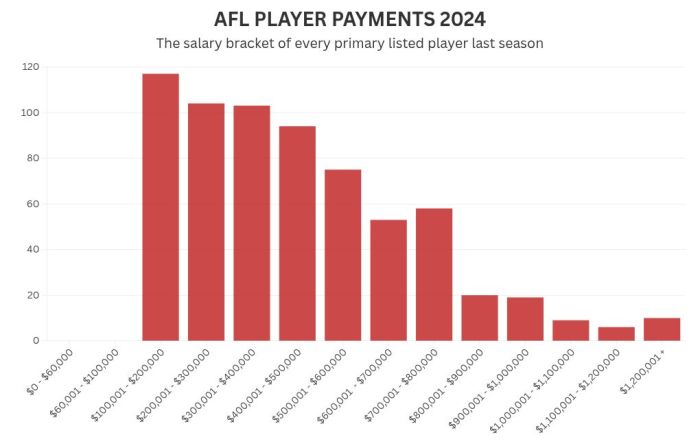
The Australian Football League (AFL) has long recognized the importance of investing in player talent as a crucial driver of its net worth. Each year, the AFL’s clubs compete fiercely to secure the best talent through the national draft, free agency, and trades. In this analysis, we will delve into the financial implications of the AFL’s investment in player talent and explore its impact on the league’s net worth.The AFL’s investment in player talent is a multi-faceted process, involving various strategies to secure, retain, and develop top-notch footballers.
The national draft is a key component, where clubs can select the best young talent from around the country. However, the draft is not the only means of acquiring top players. Free agency allows established players to negotiate their contracts with other clubs, while trades enable teams to acquire high-profile players from competing teams. The financial stakes are high, with top players commanding multi-million-dollar contracts.
While the acquisition of top talent can lead to increased revenue from higher attendance, merchandise sales, and broadcasting rights, it also comes with considerable expenses. The financial burden of securing top players can be substantial, with clubs often having to mortgage their future prospects to secure the signatures of high-profile players.
Talent Acquisition Strategies
The AFL’s clubs employ various strategies to acquire top talent, each with its financial implications. *The national draft allows clubs to select the best young talent, but it also carries risks. A poor draft pick can leave a club with a costly dud, while a good draft pick can yield long-term success.
The national draft is a gamble for clubs. While securing a top draft pick can yield a talented player, it can also leave a club with a player who fails to live up to expectations. This gamble is reflected in the large sums of money spent on draft picks, with top picks commanding millions of dollars.
For example, the Adelaide Crows selected forward Taylor Walker with the first overall pick in the 2007 national draft. Walker has since become one of the league’s top forwards, with a lucrative contract reflecting his value to the team. However, not all draft picks have been so successful, highlighting the risks and rewards of investing in young talent.
Free Agency and Trades
Free agency and trades allow clubs to acquire established players, often at a higher cost than drafting young talent. The financial implications of these strategies can be significant, with top free agents and traded players commanding multi-million-dollar contracts.*Free agency can be a double-edged sword. While securing a high-profile free agent can increase revenue, it also raises the costs for other teams, who may struggle to retain their own talent.
The lure of free agency has seen clubs compete fiercely to secure top players, often at a substantial cost. While free agents can bring excitement and revenue to a team, they can also be a burden on other clubs, who may struggle to retain their own talent. For example, the Brisbane Lions’ decision to sign Luke Hodge and Dayne Beams as free agents in 2013 led to a significant increase in costs for the club.
The trade system can also have a profound impact on a club’s finances, as seen in the case of the Fremantle Dockers’ trade for Lachie Neale in 2018. Neale’s contract was reportedly worth 12 years and over $3 million, marking one of the largest trades in AFL history.
Financial Implications of Player Injuries, Retirements, and Controversies
Player injuries, retirements, and controversies can have a significant impact on a club’s finances, with long-term consequences for the league’s net worth.*Injuries can lead to costly medical bills and loss of revenue from lost games and reduced attendance, while retirements can impact team performance and revenue. Controversies can damage a club’s reputation, leading to reduced sponsorship and revenue opportunities.
Player injuries can be a costly and time-consuming issue for clubs, with the financial burden of medical bills and lost revenue from lost games and reduced attendance. Retirements can also impact team performance and revenue, particularly if the departing player is a key contributor. The reputational risk of controversies can be substantial, with damaging effects on sponsorship and revenue opportunities.
| Financial Implications | Example |
|---|---|
| Injury costs | Carlton’s injury woes in 2018 led to a reported 3.5 million dollar increase in medical expenses. |
| Lost revenue | The Geelong Cats’ 2019 season was impacted by a combination of injuries, resulting in a 12.8 percent decrease in average attendance. |
| Retirement costs | The Melbourne Football Club’s 2018 off-season saw several high-profile retirements, resulting in a reported 2 million dollar increase in team expenses. |
| Reputational damage | The Essendon Football Club’s 2013 supplements saga damaged its reputation and led to significant sponsorship losses. |
Conclusion
Investing in player talent is a complex and high-stakes game for AFL clubs. The financial implications of acquiring top talent, managing player injuries and retirements, and navigating controversies are significant and far-reaching. As the AFL continues to evolve, its clubs will need to adapt and innovate to secure the best talent and protect their financial interests.
Financial Balance in the AFL

The Australian Football League (AFL) is a multi-million dollar sports league, and as with any such organization, maintaining a balance between revenue and expenses is crucial for its long-term success. While the AFL has experienced significant growth over the years, it still faces challenges in managing its finances effectively. In this section, we will delve into the AFL’s financial operations, including revenue management, expenditure control, and profit sharing among stakeholders, to gain a deeper understanding of how they strike a balance between their income and expenses.
Revenue Management
The AFL generates revenue from various sources, including broadcasting rights, sponsorship deals, gate receipts, and membership sales. The league’s broadcasting deal with Channel Seven, which was renewed in 2017, is worth AU$2.5 billion over eight years. This significant revenue stream has enabled the AFL to invest in grassroots football development, improve stadium facilities, and increase player salaries. The AFL also generates revenue from sponsorship deals with major brands, such as Hyundai, NAB, and Toyota.
Expenditure Control
Controlling expenses is critical for the AFL’s financial sustainability. The league has implemented various cost-saving measures, including reducing operating costs, renegotiating sponsorship deals, and increasing revenue from broadcasting rights and membership sales. The AFL has also invested in technology to improve efficiency and reduce costs in areas such as ticketing, marketing, and sponsorship management.
Profit Sharing among Stakeholders
The AFL distributes a significant portion of its revenue to its 18 clubs, which are then used to fund player salaries, stadium upgrades, and other operational costs. The league also provides financial support to its clubs through the AFL Commission’s funding model. This model ensures that clubs receive an equitable share of the league’s revenue, taking into account factors such as club performance, revenue generation, and financial stability.
Comparing Fiscal Discipline with Other Top-Tier Sports Leagues
The AFL’s financial operations and fiscal discipline are subject to scrutiny and comparison with other top-tier sports leagues worldwide. While the AFL’s revenue management and expenditure control measures are considered best-in-class, other leagues, such as the National Football League (NFL) and the English Premier League (EPL), have also implemented sophisticated financial systems to manage their finances effectively.
Revenue Streams Comparison
| League | Broadcasting Rights (AU$ billion) | Sponsorship (AU$ billion) | Gate Receipts (AU$ million) |
|---|---|---|---|
| AFL | 2.5 | 1.2 | 150 |
| NFL | 4.4 | 1.5 | 300 |
| EPL | 9.5 | 1.8 | 200 |
Profit Distribution Comparison
- The AFL distributes approximately 70% of its revenue to its 18 clubs.
- The NFL distributes around 55% of its revenue to its 32 teams.
- The EPL distributes around 50% of its revenue to its 20 teams.
The AFL’s financial operations are designed to strike a balance between revenue and expenses. By generating significant revenue from broadcasting rights, sponsorship deals, and membership sales, the league is able to invest in grassroots football development, improve stadium facilities, and increase player salaries. The AFL’s expenditure control measures, including reducing operating costs and renegotiating sponsorship deals, enable the league to maintain a sustainable financial position.
The league’s profit sharing model among stakeholders ensures that clubs receive an equitable share of the revenue, promoting financial stability and fairness within the league.
The AFL’s Economic Contribution to Australian Communities
As the Australian Football League (AFL) continues to grow in popularity and reach, its economic impact on various communities across the country cannot be overstated. From creating employment opportunities to driving tourism and infrastructure development, the AFL’s presence has a profound effect on the local economies. The AFL’s presence in Australian communities has led to a surge in job creation.
The league’s operations, coupled with the growth of its affiliated clubs, have generated new employment opportunities across various sectors. These jobs range from coaching and administrative roles to marketing and event management positions. As a result, communities have experienced a significant increase in employment rates, contributing to the overall economic growth and prosperity of the region.
Job Creation Through AFL-Related Industries
The AFL’s impact on job creation is not limited to direct employment opportunities within the league. A range of related industries, including catering, hospitality, and tourism, have experienced significant growth as a result of the influx of fans and events. This has created a ripple effect, leading to the creation of jobs in these sectors.
- Food and Beverage Industry: The AFL’s events, such as the AFL Finals Series, have sparked a surge in demand for food and beverages. This has led to the creation of new jobs within the industry, from cooks and chefs to event coordinators.
- Accommodation and Tourism Industry: The influx of spectators and tourists has placed a strain on accommodation and tourism services. To cater to this demand, hotels, motels, and short-term accommodation providers have increased their capacity, creating new job opportunities in the sector.
- Transportation and Logistics Industry: The movement of people and goods to and from events, as well as the increased demand for transportation services, has led to an upsurge in job creation within the transportation and logistics industry.
In addition to job creation, the AFL has also played a significant role in driving tourism and infrastructure development in various communities. The league’s events have attracted visitors from across the country, injecting significant revenue into the local economy. This, in turn, has spurred investment in infrastructure development, including the construction of new stadiums and amenities.
Community-Based Initiatives and Social Responsibility
The AFL has a long history of engaging with and supporting local communities. This commitment to social responsibility is evident in various initiatives, from grassroots development programs to community outreach and education programs.
- Grassroots Development Programs: The AFL’s grassroots development programs have made a significant impact on the lives of young people across the country. These programs focus on developing skills and knowledge in football, as well as promoting the values of teamwork, discipline, and respect.
- Community Outreach Programs: The AFL’s community outreach programs aim to engage with and support local communities, providing resources and support to those in need. These programs have been instrumental in promoting social cohesion and community development.
- Education and Employment Programs: The AFL’s education and employment programs provide opportunities for young people to develop their skills and knowledge in areas such as football, business, and leadership. These programs have helped to equip young people with the skills and qualifications necessary to succeed in the workforce.
Through its community-based initiatives and social responsibility, the AFL has demonstrated a commitment to making a positive impact on the lives of Australians. By investing in education, employment, and community development, the league has helped to promote social cohesion, economic growth, and community prosperity.
Expert Answers
What are the main revenue streams for the AFL?
The main revenue streams for the AFL include broadcasting rights, sponsorships, and ticket sales.
How does the AFL’s brand equity impact its net worth?
The AFL’s brand equity, built on its rich history, iconic events, and cultural significance, significantly contributes to its net worth by attracting lucrative sponsorship deals with top global brands.
What is the impact of key stakeholders on the AFL’s net worth?
Key stakeholders, including the AFL Commission, teams’ owners, players, and sponsors, play a crucial role in shaping the league’s net worth through their decision-making and investment strategies.
How does the AFL balance revenue and expenses?
The AFL balances revenue and expenses through efficient financial operations, including revenue management, expenditure control, and profit sharing among stakeholders.
